Misogynation by Laura Bates
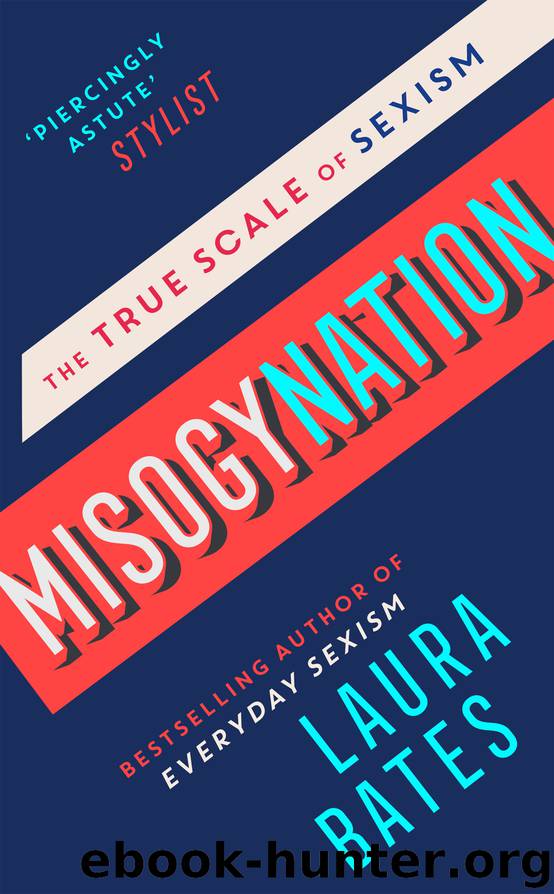
Author:Laura Bates [Bates, Laura]
Language: eng
Format: epub
Publisher: Simon & Schuster UK
Originally published 26 June 2015
BABIES BEHIND BARS: WHY CAMERON’S SUPPORT OF PRISON REFORM FALLS SHORT
On Monday, David Cameron made a speech about the need for comprehensive prison reform, including a particular mention of the detention of pregnant women and mothers with young babies. Speaking at the Policy Exchange think tank in Westminster, he said: ‘A sad but true fact is that last year there were 100 babies in our country living in a prison. Yes, actually inside the prison. In the prison’s mother-and-baby unit, to be precise. When we know the importance of the early years for child development, how can we possibly justify having babies behind bars?’
Under the new reforms, the government would consider alternative forms of dealing with offenders, including satellite-tagging technology and ‘problem-solving courts’, which would order offenders into treatment programmes for issues such as drug addiction.
Cameron was right to raise the issue of the catastrophic state of the prison system (he’s the first prime minister for twenty years to do so, in a speech solely focusing on prisons), and right to recommend reform. The current system is not working, as the statistics show: 46 per cent of all prisoners and 60 per cent of those with short sentences reoffend within a year. The situation is equally dire for prisoners’ well-being: there are, on average, 600 incidents of self-harm in prisons every week. But the problem demands a more comprehensive solution than Cameron suggests, particularly with regard to women.
More than 9,000 women were received into prison last year, the majority for non-violent offences. An estimated 17,240 children, including many under five years old, are separated from their mothers by imprisonment. Only 5 per cent of children with a mother in prison are able to stay in the family home, and only 9 per cent are cared for by their fathers. In 2011–12, according to the Prison Reform Trust, just 8.7 per cent of women were able to find employment on release, compared with 27.3 per cent of men.
According to the London-based charity Women in Prison, 46 per cent of women in prison report having suffered domestic violence, and 53 per cent report having experienced emotional, physical or sexual abuse during childhood (compared with 27 per cent of men). Despite making up only 5 per cent of the prison population, women in prison account for 28 per cent of the self-harm incidents. Women in custody are five times more likely to have a mental health concern than women in the general population and 46 per cent say they have attempted suicide at some time in their life. Many vulnerable women end up in prison because they have been coerced into committing crimes by male partners or family members; in 2013, 48 per cent of women said they committed their crime in order to support the drug habit of someone else.
The problem doesn’t end when women enter prison – former inmates have described abuse, and a recent report by national charity the Howard League for Penal Reform found that female prisoners had been coerced into sex and pressured into abusive relationships with staff.
Download
This site does not store any files on its server. We only index and link to content provided by other sites. Please contact the content providers to delete copyright contents if any and email us, we'll remove relevant links or contents immediately.
| Anthropology | Archaeology |
| Philosophy | Politics & Government |
| Social Sciences | Sociology |
| Women's Studies |
Nudge - Improving Decisions about Health, Wealth, and Happiness by Thaler Sunstein(7689)
The Fire Next Time by James Baldwin(5429)
iGen by Jean M. Twenge(5408)
Adulting by Kelly Williams Brown(4564)
The Sports Rules Book by Human Kinetics(4378)
The Hacking of the American Mind by Robert H. Lustig(4372)
The Ethical Slut by Janet W. Hardy(4241)
Captivate by Vanessa Van Edwards(3837)
Mummy Knew by Lisa James(3686)
In a Sunburned Country by Bill Bryson(3535)
The Worm at the Core by Sheldon Solomon(3483)
Ants Among Elephants by Sujatha Gidla(3459)
The 48 laws of power by Robert Greene & Joost Elffers(3232)
Suicide: A Study in Sociology by Emile Durkheim(3017)
The Slow Fix: Solve Problems, Work Smarter, and Live Better In a World Addicted to Speed by Carl Honore(3001)
The Tipping Point by Malcolm Gladwell(2910)
Humans of New York by Brandon Stanton(2864)
Handbook of Forensic Sociology and Psychology by Stephen J. Morewitz & Mark L. Goldstein(2692)
The Happy Hooker by Xaviera Hollander(2686)
